
Director: J. Elder Wills
Release Date: September 1936
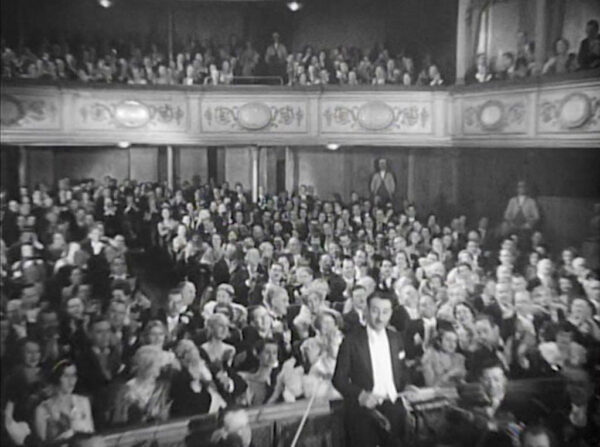
The Daily Herald reported, 27 April 1936, that yesterday ‘Hundreds of men and women in evening dress…stood in struggling groups outside the Lyric Theatre, [Shaftesbury Avenue] clamouring for a chance to appear in crowd scenes in a film.’ The report continued that these extras were paid ‘a guinea for the day and a free lunch’ and that ‘They sat and looked happy, turned over programmes, they looked superior and haughty and clapped their hands. And they did this from 9 a.m. till 7 p.m. But the whole thing looked like crazy week, although the conductor and his orchestra were in full evening dress, and the violinists, the flute player, and the cornet went through the motions of playing, not a note was heard. Paul Robeson then came on and opened his mouth. Not a sound was heard but the audience, who had been told what to do, clapped heartily. Later these “shots” will be fitted into their proper place in the film, to represent a fashionable audience in an opera house applauding Robeson. When the picture is finished this part will take three minutes to show on the screen.’

Capture 1
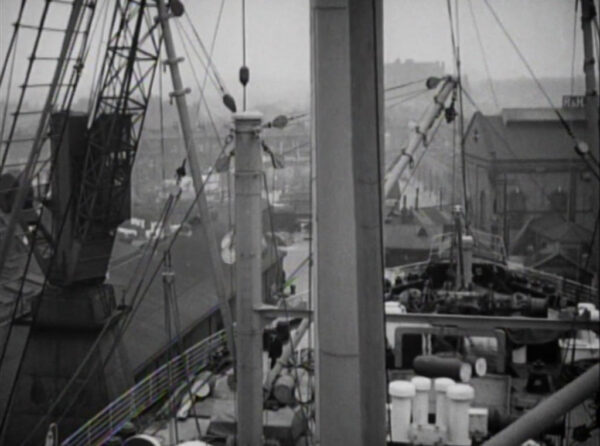
Tower Bridge and the foreground dock workings set the scene for Paul Robeson's employment.
Capture 2
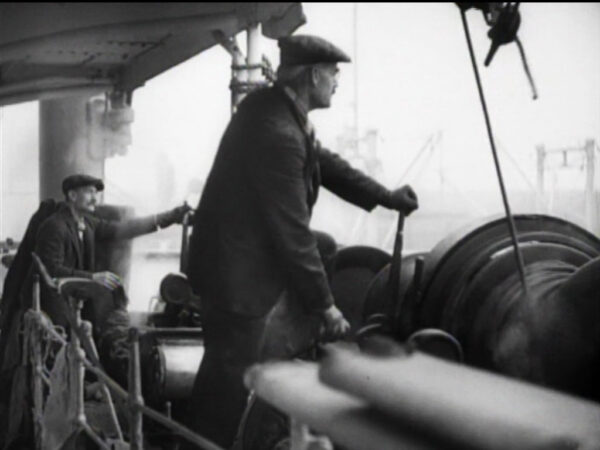
An anonymous dock scene.
Capture 3
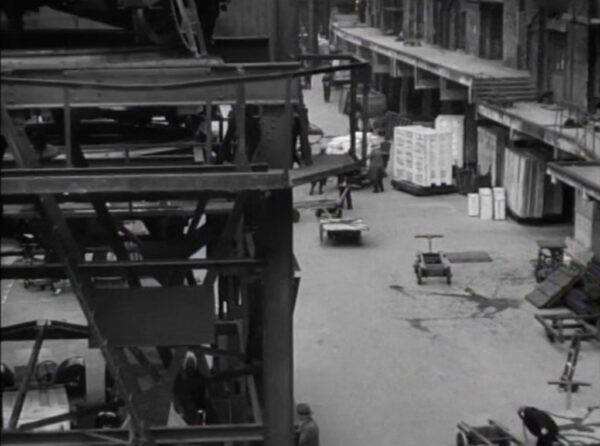
Another anonymous dock scene.
Capture 4
Following this equally anonymous dock scene Robeson appears working in a studio bound set.
Capture 5
The orchestra and audience at the Lyric Theatre, Shaftesbury Avenue.
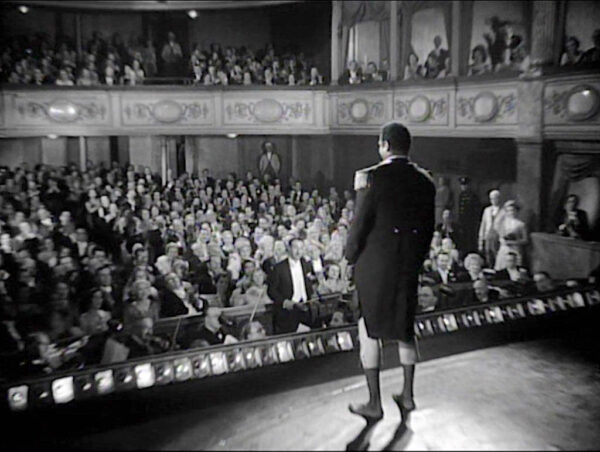
Capture 6
Robeson addresses his audience at the Lyric Theatre.